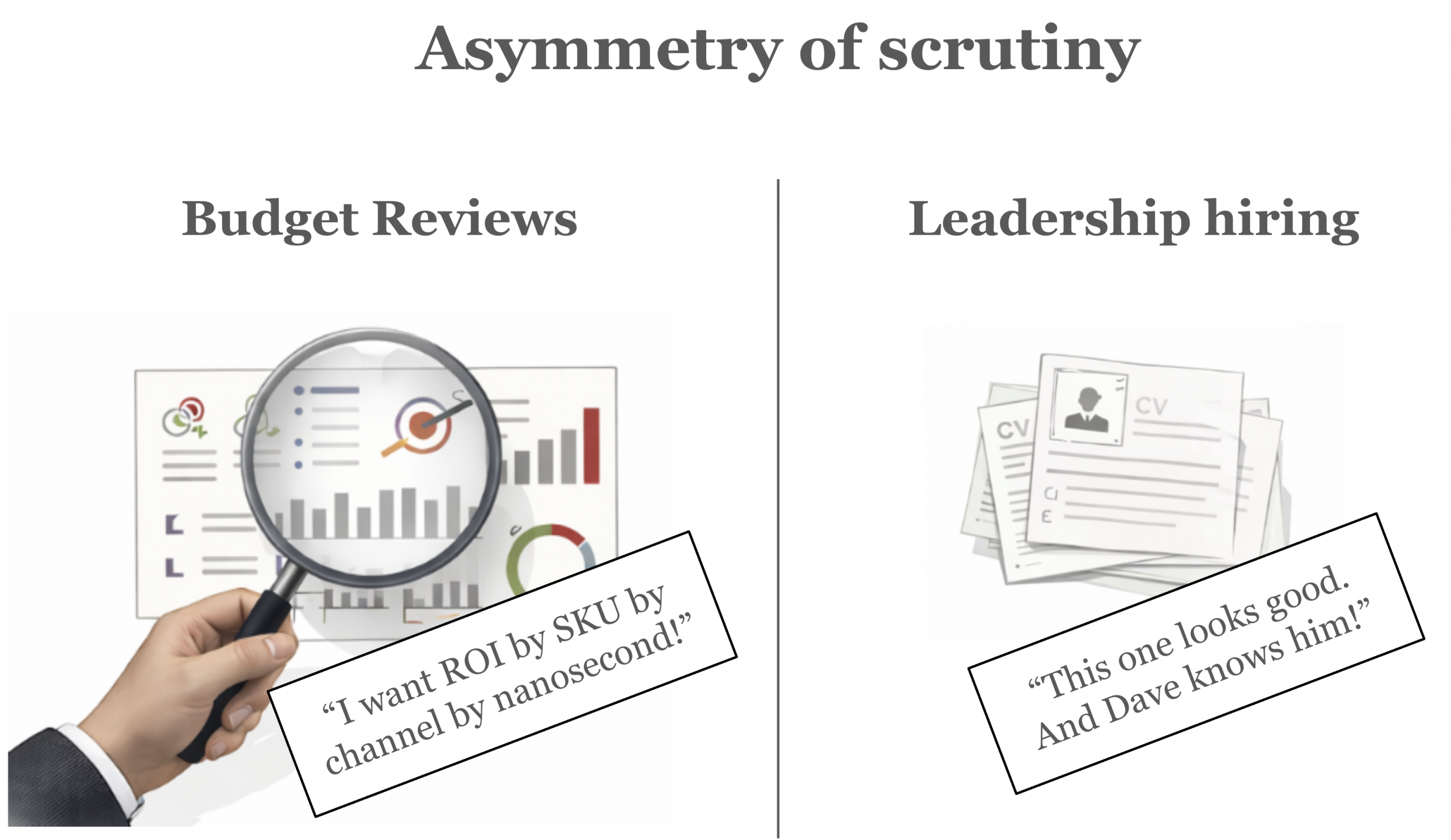
Many businesses invest £millions, sometimes tens or hundreds of £millions, into marketing each year.
At that level of capital, scrutiny is intense. There are rigorous reviews, detailed performance dashboards, ROI analysis, and constant interrogation of all manner of KPIs. Quite rightly, every pound is expected to justify itself.
The upside of high-quality decision-making is significant: increased market share, competitive advantage, stronger margins, improved shareholder returns etc.
And the downside of sub-optimal decision-making is even greater: performance drifts, losses compound, confidence weakens, morale dips, talented people leave (or worse stay around unmotivated). Ultimately, reputations at the top of the organisation take a hit and the impact is rarely confined to one quarter’s results.
Given that level of consequence, something continues to puzzle me…
If you apply this degree of rigour to how the marketing budget is spent, why would you apply less rigour to the appointment of the leader responsible for spending it?
Too often organisations shortcut best-practice hiring. They lean too heavily on personal networks, place adverts on LinkedIn, use generalist recruiters, and rely on subjective judgement to make selection decisions.
The process may well look effective. Piles of CVs pour in. Rounds of interviews take place. Candidates seem impressive on paper and in interviews and the best person amongst them gets hired.
But was the hiring brief expertly evaluated? Was the best possible talent ever actually reached and considered? What steps were taken to avoid falling into the trap of bluntly qualifying through simplistic pattern matching (“we need someone who knows our industry” or “they must have practitioner level knowledge to be qualified for this leadership role”).
The result? Sub-optimal leadership and a foundational weakness. The consequences of a sub-optimal hire are rarely dramatic in the short term. They are cumulative. Strategy becomes cautious rather than bold. Capable but not exceptional talent is hired beneath them. Over time, performance ceilings form.
No matter how large the budget, or how well it’s counted, the outcomes will follow the quality of the judgement around people.
It’s not the size of the budget that matters. It’s who’s investing it.